04 · The human behind Samtics
Hi, I'm Samuel.
Engineer in Technology and Business Solutions. I lead IT and projects in international logistics and studied AI ethics at Turing College. Ese does the heavy lifting; I decide with you.
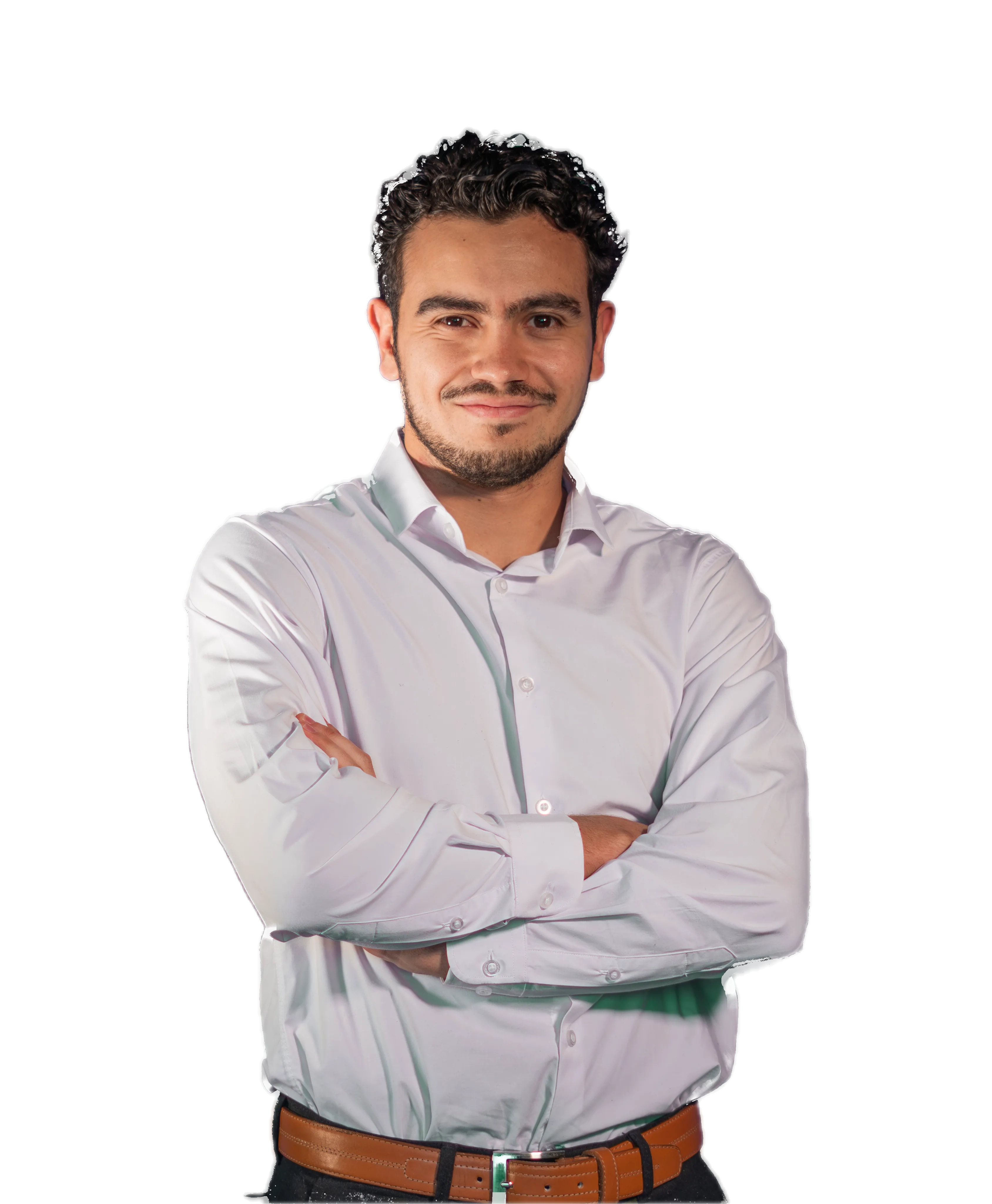
Intentional tech. Human potential, unlocked.
Sound familiar?
There's a person behind it, not an office with a front desk. And beside you, a team: you, who know your work, and Samuel, who turns it into systems. We talk, design together and build it with agents, step by step. The tech handles the repetitive parts. You make the calls that matter.
Not sure which one is you? Good. We'll figure it out together.— S
You have an AI or tech idea, or you've already started, and the project moves without a clear owner. Lots of tools, little judgment about which to use and why.
I start from the decision, not the tool. We pin down what you want to achieve, what can be tested fast, and what isn't worth it. I run the project in short cycles: visible progress every week, risks out in the open, and someone on your side deciding at each key point.
You want AI agents doing real work (reading email, assembling files, drafting, reviewing) but you don't know where to let them loose and where not to. An agent with no limits is a risk; one with too many limits is useless.
I design the system around one boundary: what the agent does, and what a person always decides. I draw the diagram before writing code, define what each agent may read, propose, or execute, and leave a trail for everything: who did what, when, and how to undo it. Then I build it, test it on your real cases, and tune it.
Someone on your team copies data from one system to another, hunts for the same email every day, or chases replies by hand. It's necessary, repetitive work, done by people who could be doing something else.
First I look at the process as it is today, with the person who does it. I separate pure typing from what needs judgment. I automate the first, keep the second in front of a person, and measure before and after with you. If you don't need AI, I don't use it; sometimes a well-placed script is enough.
Your brand doesn't look like you, or doesn't exist yet. Your site is a template nobody wants to touch, or you don't have one. And you need something clear, crafted, and that sounds like you.
I walk the whole path with you, not just the page. Brand first: what you want to say, how it sounds and how it looks (logo, color, type). Then communication: the message and the copy, in your words. If it helps, a character that speaks for the brand. Then the site: prototypes you can see and comment on early, built without extra dependencies and left in hands you can manage. Bilingual when you need it, accessible always.
Four systems I've built. In each one, what the agent decided and what the person decided.
The full story is one click away, if you want the detail.— S
My own agentic operating system.
The agent sorts and drafts. I decide what comes in and what goes out.
See the full case →An operations platform for Crossmotion, an international logistics company.
Agents gather the context. People sign off.
See the full case →A portfolio site for a VFX studio.
The machine builds the pages. The studio decides how its work looks.
See the full case →From the brand and its character to the site you are reading.
Agents research, propose, and build. I decide every word and every stroke.
See the full case →With intention, in four steps. You always know which step we're on, what's next, and which decision is yours.
I ask the uncomfortable questions kindly. Promise.— S
I listen, look at how you work today, and ask the uncomfortable questions, kindly. We leave with the problem stated well and a list of what we won't do.
You geta one-page summary of the challenge, scope, and risks.
I draw before I build: the flow, the system diagram, and the points where a person decides. We review it together.
You getwireframes or a diagram and a phased plan.
I build in short cycles, with agents doing the heavy lifting and me reviewing every step. You see progress every week, not at the end.
You getsomething working, tested on your real cases.
I teach you to use it, correct it, and switch it off. I stay as long as you need me. What we learn gets written down.
You getshort documentation and follow-up.
By project, with a clear start and end, or as ongoing support. We'll sort it out on the call.
04 · The human behind Samtics
Engineer in Technology and Business Solutions. I lead IT and projects in international logistics and studied AI ethics at Turing College. Ese does the heavy lifting; I decide with you.
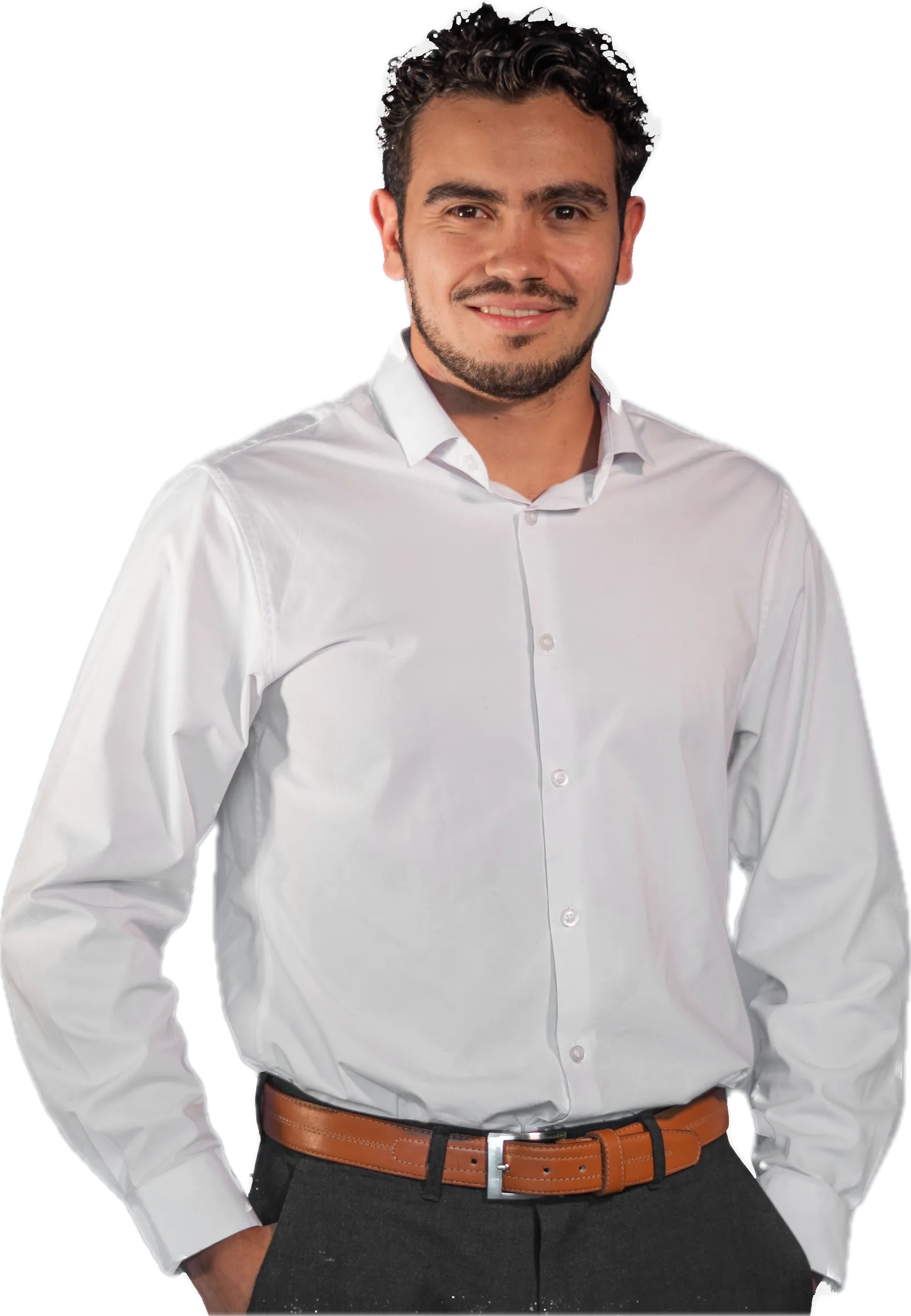
By project, at a fixed price, or monthly if I stay on to support you. I'll quote after the first call, which is free and with no commitment.
We split it into short phases from day one. You see progress every week, not at the end, and you always know what's next.
I only use what is needed, in your tools or in services you approve. Everything an agent does leaves a trail and can be undone.
No. You know your work; I translate. At the end I teach you to use it, fix it and switch it off.
I'll tell you. If a clearer process or a well-built spreadsheet does the job, we start there.
Yes, remotely, in Spanish or English.
05 · The human who'll answer you
Tell me what you or your team still do by hand. 30 minutes, no commitment (Mexico City time).

Finding times…
Prefer to write? I reply in Spanish or English, whichever suits you.